
Kickstarter is more than a platform to collect pledges. It is a marketing engine, a community accelerator, and a live stress test for your game concept. When handled well, it supports your indie game long after the campaign ends by boosting visibility, attracting a committed early audience, and helping refine the game through real feedback.
Many campaigns fail not because the idea is weak but because preparation is shallow. The most successful Kickstarter video games follow a pattern: they target a specific niche, present a clear hook immediately, offer a demo players can try, and launch to an audience that already cares. Treat your campaign like a proper game launch instead of a hopeful announcement, and your chances of success grow significantly.
This guide breaks down the full process from validating whether your game is ready for Kickstarter to planning your post-campaign roadmap. Use it as a blueprint to build a campaign that attracts the right backers, funds realistically, and positions your indie game for long-term success.
1. Why Kickstarter Still Matters for Indies
Kickstarter still reliably turns early interest into funding, wishlists, and proof-of-demand that publishers notice. For indie developers, it validates your game and shows tangible audience interest; the strongest campaigns focus on a specific niche, demonstrate a clear hook, and provide a gameplay experience players can understand quickly.
Remember, this is a timed marketing campaign, not a static listing. The presentation, communication, and pre-launch preparation are as important as the game itself.
Next Step: Identify your niche and define your hook before doing any campaign planning.
2. Decide If Your Game Is Kickstarter-Ready
Before pursuing funding, ensure your project can handle the scrutiny of a public, time-limited campaign. Backers judge whether you understand your game, your audience, and your production pipeline.
A Kickstarter-ready project usually has:
- A recognisable, testable core loop
- A clearly defined target audience (not “everyone who likes games”)
- A visual identity that stands out in a single screenshot or GIF
- Enough development progress to demonstrate credibility
Checklist before planning your campaign:
- You have a demo, vertical slice, or meaningful gameplay footage
- You can express your unique selling point in one sentence that players immediately understand
- You already have a small audience – even a few hundred people – on Discord, social channels, or an email list
Next Step: If most answers are no, schedule 4–8 weeks to strengthen these foundations before drafting your campaign.
3. Pre-Production: Setting Realistic, Strategic Goals
A realistic funding goal is the foundation of a strong campaign. Calculate minimum production costs including art, audio, software, taxes, Kickstarter fees, and a contingency; lower but honest targets typically build momentum and credibility more easily.
Success is broader than money. Kickstarter can increase wishlists, grow your email list, attract press coverage, and spark publisher interest, so define success across these metrics and avoid over-scoping stretch goals that push your timeline off track.
Next Step: Create a budget spreadsheet covering base game costs and every reward tier to confirm your target is achievable.
4. Research: Learning From Successful and Failed Campaigns
Analyse 5–10 comparable campaigns in your genre, looking closely at:
- Hooks and taglines that capture attention
- Reward tiers that converted well
- Video pacing and storytelling style
- Page structure, FAQs, and updates cadence
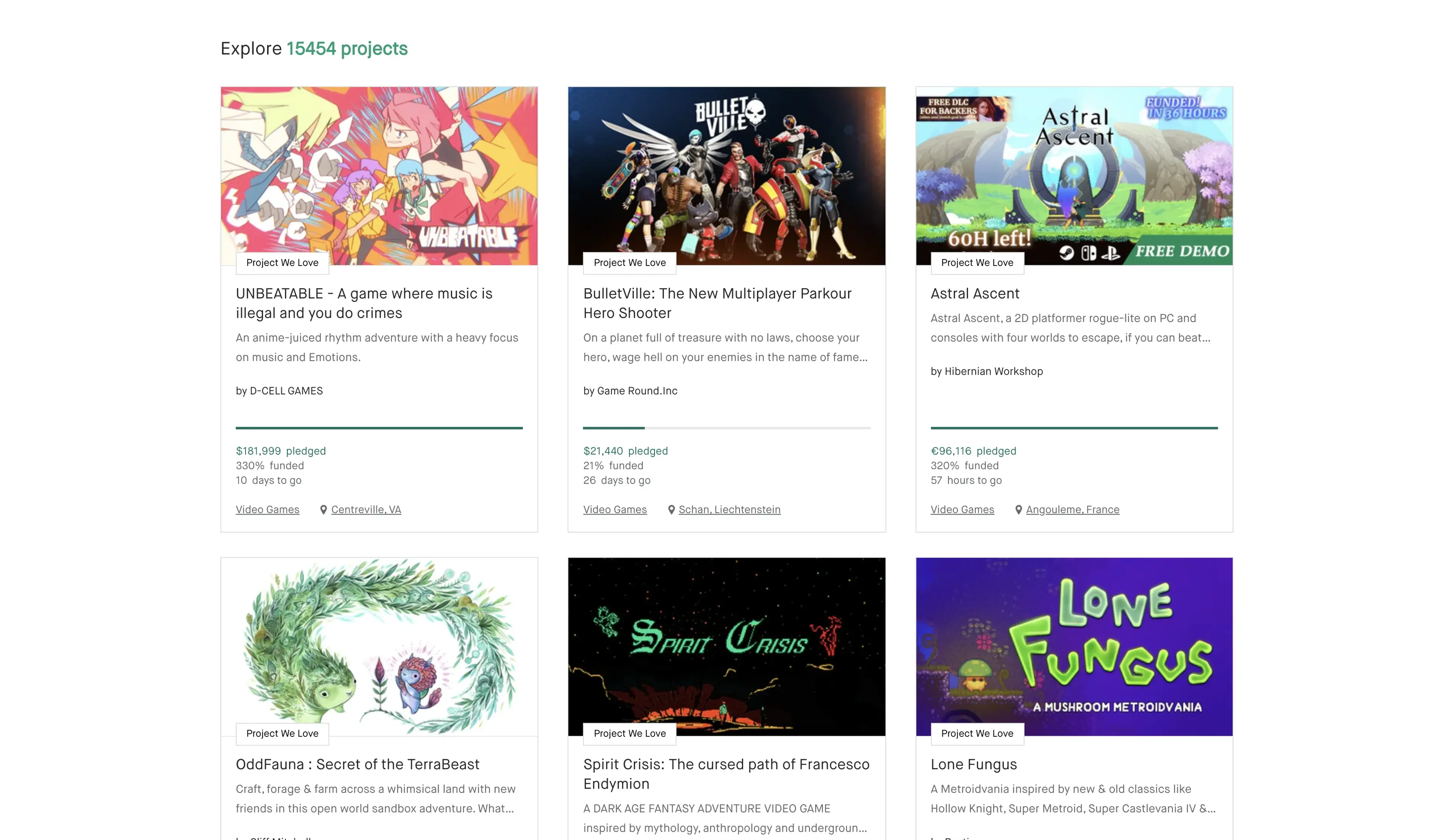
Build a swipe file of examples, noting what worked and what failed. Observing common pitfalls such as unclear budgets, vague descriptions, and a lack of gameplay can help you avoid the most frequent reasons campaigns underperform or fail.
Next Step: Identify patterns in campaigns with similar goals and adjust your pitch to meet or exceed their standards.
5. Building Your Audience Months Before Launch
Launching to no one is one of the fastest routes to failure. Aim for 3–6 months of steady community building before going live on Kickstarter.
Channels to focus on:
- Steam wishlist funnel if your game has a Steam page
- A landing page to collect email addresses
- A Discord server or subreddit for your audience
- Engagement in genre-specific communities and relevant subreddits
Aim for at least a few hundred email subscribers and a few thousand wishlists before launch instead of relying on Kickstarter’s browsing traffic alone. Early playtesting during this phase sharpens your pitch, validates your USP, and gives you real language players use to describe your game.
Next Step: Commit to weekly community engagement and start collecting sign-ups as early as possible.
6. Crafting the Perfect Kickstarter Page
6.1 High-Converting Campaign Structure
Key sections of a successful page include:
- Above-the-fold hook: one-line pitch, strong visual, and a short gameplay clip or GIF
- Game overview: genre, core fantasy, and key features explained from the player’s point of view
- Differentiator: what makes the game unique in its niche
- Team credibility: background, past work, and proof you can deliver
6.2 Visuals, Demo, and Proof
High-quality visuals and GIFs demonstrating real gameplay are critical; concept art alone is rarely enough to convert backers. A playable demo or vertical slice significantly strengthens trust and can improve conversion from page visitor to backer.
6.3 Video That Gets Watched
Keep videos short and front-load gameplay within the first 10–15 seconds, because most viewers decide quickly whether to stay or bounce. Show the devs briefly to humanise the project, but keep the focus on what the player will feel and experience while playing.
Next Step: Draft your video script using these principles and storyboard the key moments that must appear in the first 30 seconds.
7. Designing Smart Rewards and Stretch Goals
7.1 Reward Tiers That Don’t Destroy Your Schedule
Digital-first rewards reduce cost and complexity, letting you keep your time and budget focused on development. Examples:
- Entry tier: low price, easy for fans to back
- Mid tier: digital extras such as soundtrack, artbook, or wallpapers
- Premium tier: limited slots with beta access, name in special credits, or design-related perks
Physical rewards can quickly create delays and eat into margins once manufacturing, shipping, and logistics are accounted for.
7.2 Stretch Goals That Enhance, Not Inflate
Stretch goals should add cosmetics, quality-of-life upgrades, or small side content rather than complex new systems that risk delaying launch. Communicate clearly what belongs to the core game and what is stretch content so expectations stay realistic and trust remains high.
Next Step: Map all rewards and stretch goals in a timeline to confirm feasibility.
8. Timing, Duration, and Launch Strategy
Campaigns between 25–35 days tend to perform best; around 30 days is the current sweet spot for maximising urgency without burning out your team or audience. Longer campaigns often lose momentum in the middle and can even see increased cancellations.
Choose your timing carefully by avoiding major industry events and big game releases that might drown your coverage, and schedule launch and end times around your primary audience’s time zones.
Next Step: Pick a launch window and confirm there are no major conflicts for your target audience.
9. Marketing Your Campaign Like a Game Launch
9.1 Pre-Launch Hype and Wishlist Building
Countdown emails, teaser clips, and pre-launch devlogs increase day-one traffic. A strong first 24 hours boosts Kickstarter’s internal ranking and visibility.
9.2 Organic Channels: Community, Influencers, and Press
Use devlogs, Reddit threads, and your own website to communicate. Send targeted pitches to niche press and YouTubers. Offer early builds to generate authentic coverage.
9.3 Paid Ads Without Wasting Money
Ads work if your page is polished. Focus on retargeting and simple gameplay-focused creatives that remind players to back your project.
Next Step: Prepare pre-launch content and outreach schedule at least 6–8 weeks before launch.
10. Managing the Campaign Day-to-Day
A Kickstarter campaign is effectively a full-time job while it runs. A simple daily routine might include:
- Replying to comments and messages promptly
- Posting meaningful updates several times per week
- Sharing fresh GIFs or short reveals
- Maintaining ongoing conversations with influencers, streamers, and press
Consistency reinforces trust and keeps momentum going, especially after the early excitement has passed.
11. Handling Mid-Campaign Slumps and End-Game Push
Most campaigns follow a U-shaped funding curve. Reignite interest mid-campaign with small reveals or updates. Use your mailing list and social channels to re-engage potential backers. The final 48 hours should include reminders and last-chance messaging without penalising early supporters.
12. After Funding: Delivering, Communicating, and Leveraging Success
Communicate regularly after the campaign ends; transparent updates keep your community supportive even when delays happen. Use backer surveys and fulfilment tools to manage rewards efficiently and keep your promises visible and trackable.
Your Kickstarter community becomes your first wave of superfans who can drive wishlists, early reviews, and word-of-mouth, and a successful campaign becomes powerful proof-of-demand in future conversations with publishers and platforms.
13. Common Mistakes Indie Devs Make on Kickstarter
Some of the most common, high-impact mistakes include:
- No demo or meaningful gameplay footage
- Overly high or unclear funding goals with no breakdown
- A generic pitch with no defined target audience
- Overcomplicated physical rewards that strain time and budget
- Inconsistent communication during or after the campaign
Using the framework above helps you avoid these pitfalls and gives your indie game a genuine chance to succeed on Kickstarter and beyond.
Conclusion
Launching a Kickstarter for your indie game is challenging, but when done strategically it becomes more than just a funding tool. It is an opportunity to grow your audience, validate your ideas, and build a community that will support your game long after launch. By preparing carefully, setting realistic goals, crafting a clear pitch, and engaging backers consistently, you increase your chances of success and turn your campaign into a launchpad for your indie game’s future. Treat it as a full-fledged marketing and community effort, and the results can extend far beyond the money raised.
At The Game Marketer, we help indie developers turn Kickstarter campaigns into successful launches. From building your audience and structuring reward tiers to crafting pitch-perfect videos and planning marketing campaigns, we provide guidance tailored to your game and goals. With the right support, you can run a campaign that not only funds your project but also creates a lasting community around your game.