
Early Access is more than a pre-launch phase—it's an opportunity to lay the foundation for long-term success. While many developers use it primarily to test game functionality and squash bugs, the real value of Early Access lies in the feedback loop it creates between developers, marketers, and the player community.
If approached with intention, beta testing and community feedback can directly influence how a game is marketed, perceived, and received at launch and beyond. This is where community meets strategy.
This blog will help you understand how to use beta testing and feedback strategically to shape your game marketing approach—covering the best timing for beta launches, effective management of beta communities, how to spark word-of-mouth buzz, and the right way to integrate feedback into your marketing and messaging.
Let’s break things down step by step.
1. Understanding the Real Role of Beta Testing in Game Marketing
Beta Testing Is More Than Bug Fixing
Many developers treat beta testing purely as a technical milestone. They look for gameplay glitches, server issues, or crash reports. While these are valid concerns, game marketers must look deeper.
Beta testing is your first controlled exposure to real players. It provides:
- Authentic user reactions to gameplay, storylines, and game mechanics
- Organic content shared by players (clips, screenshots, memes)
- Community tone and language, which can guide marketing tone of voice
- Early detection of marketable features, based on what excites players most
For example, if players consistently praise a specific mechanic or game mode during the beta, this becomes a core message for your launch trailer, press releases, or ad copy.
It Shapes Player Expectations
During beta testing, players start forming opinions—not only about the game but about your brand’s transparency, community responsiveness, and long-term support.
If players feel heard and valued, they’re far more likely to become loyal supporters and champions of your title. This early relationship is critical for establishing trust, which plays a direct role in building a fanbase that markets the game on your behalf.
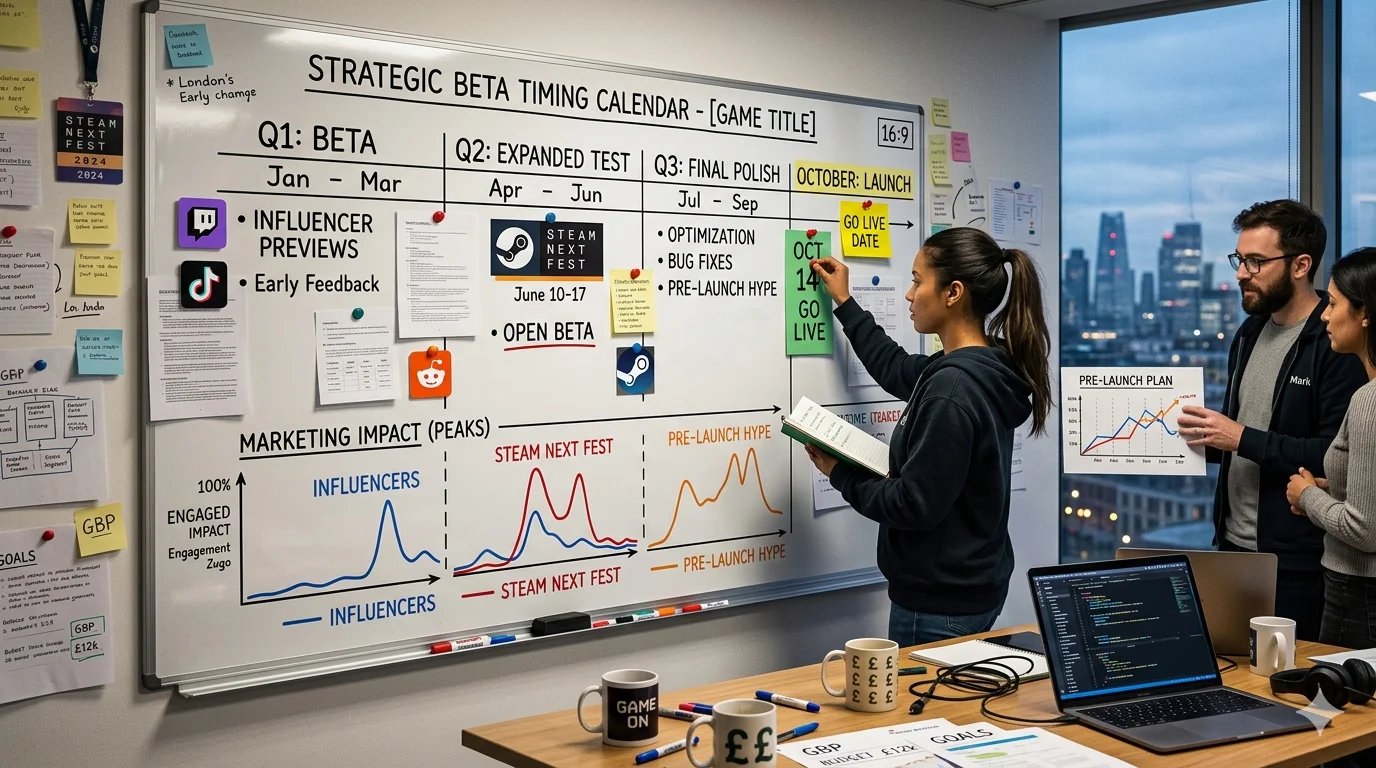
2. Timing Your Beta Test for Maximum Marketing Impact
Launching Too Early Can Backfire
If your game isn’t ready for public eyes, it’s not ready for a beta. A rushed beta can lead to:
- Negative first impressions
- Unfinished features that turn players away
- Low engagement from creators or influencers due to lack of polish
From a marketing perspective, this means lost momentum, less shareable content, and a harder road to recover perception later.
Find the Right Window
The best time to start beta testing from a marketing standpoint is when:
- The core gameplay loop is intact and stable
- Most visuals and UX are polished enough to look appealing in screenshots or clips
- You’ve built a basic community infrastructure (Discord, Steam hub, subreddit)
- You are prepared to respond and make changes, based on feedback
This way, the beta functions as both a playtest and soft marketing launch.
Closed vs. Open Beta Strategy
Closed Beta: Ideal for early feedback from a small, curated group—think influencers, testers, and your existing community. It gives you controlled insights and allows you to fix glaring issues before opening the doors to a wider audience.
Open Beta: Used to attract mass attention, stress test servers, and begin full-scale community building. This stage should be well-prepared with:
- A content strategy
- Influencer outreach
- Community managers ready to support a surge of new players
Using both phases strategically allows you to test and refine both gameplay and marketing narratives before the official launch.
3. Building and Managing Beta Communities the Right Way
Your Community Starts During Beta, Not After Launch
Early Access is often mistaken as just a development tool, but it’s your first shot at building an actual community. These players aren’t just testers—they’re your earliest adopters and the ones most likely to spread the word.
To build a healthy beta community, you need:
- Clear infrastructure
- Active engagement
- Moderation and support
- A sense of purpose for community members
Setting Up the Right Communication Channels
To facilitate smooth communication and gather insights effectively, consider these tools:
- Discord server: Best for real-time discussions, announcements, and engaging with core fans
- Trello or GitHub boards: Allow players to report bugs and track progress transparently
- Surveys & feedback forms: Useful for collecting structured opinions on specific topics
- Steam Community Hub or Reddit: Great for attracting organic discussions and reaching broader audiences
Make sure each platform has moderators and clearly defined channels to avoid chaos.
Set Clear Expectations
Beta communities thrive on clarity and trust. From the beginning, let players know:
- Which parts of the game are still in development
- What kind of feedback you're looking for
- How frequently updates will be shared
- How you plan to act on their input
Use a public development roadmap to provide visibility into what’s coming. Even a basic one reassures players that the project is being taken seriously.
Be Present and Proactive
Your presence matters. Players want to see that someone is listening. Actively respond to feedback, thank contributors, and maintain a respectful and constructive tone.
Highlight the best feedback and celebrate player-created content. This encourages others to engage and deepens the sense of community.
4. Using Feedback to Shape Your Marketing Strategy
Find Feedback Patterns That Impact Perception
When collecting feedback, your goal isn’t to react to everything—but to analyse patterns. You’re looking for:
- Features players consistently love
- Common pain points or confusing mechanics
- Emotional reactions (frustration, excitement, satisfaction)
- Vocabulary players use when describing their experience
These patterns help shape your:
- Core marketing messages
- Ad creatives and trailers
- Tone of voice in social content
- FAQ sections and community management responses
For example, if “fast-paced combat” keeps coming up in positive feedback, make sure it’s front and center in your promotional materials.
Show Players That Feedback Matters
Players are more likely to stick around—and talk about your game—if they feel their feedback has an impact.
Ways to show this:
- Release patch notes referencing player suggestions
- Highlight community fixes in dev logs or social posts
- Share before-and-after comparisons based on feedback
- Create shoutouts for top contributors
This isn’t just good practice—it’s smart marketing. It encourages continued participation and makes your community part of the development journey.

5. Encouraging Word-of-Mouth Through Community Activation
Why Word-of-Mouth Is Crucial in Game Marketing
Even in a world full of paid ads, word-of-mouth remains the most trusted form of marketing. Gamers rely heavily on opinions from peers, creators, and communities they trust.
Beta communities offer a direct path to building word-of-mouth momentum.
How to Activate Early Players as Advocates
To encourage natural promotion:
- Give players tools to share: Make sure your game is easy to stream or clip. Avoid restricting content unless absolutely necessary.
- Host community events: Competitions, giveaways, Q&A sessions, or screenshot contests can increase engagement and visibility.
- Celebrate player content: Feature fan art, gameplay clips, or mods on your website and social media. This creates a positive feedback loop.
- Offer unique titles or rewards: Recognising early players with “Founder” badges or exclusive skins makes them feel part of something special.
Engage Content Creators at the Right Time
Don’t wait until launch. Partner with small-to-medium-sized influencers during beta. They’re more likely to give honest feedback and engage deeply with the game. Their audience also tends to be more loyal and trusting.
Make sure they have everything they need—press kits, gameplay guides, and access to developer Q&As.
6. Integrating Beta Learnings Into Your Full Marketing Plan
Refine Your Messaging
Once you have data from beta players, revise your positioning:
- Use real quotes and reactions in trailers or landing pages
- Update your Steam or website descriptions to match player language
- Adjust ad copy to focus on what people actually enjoy
The goal is to speak in the same tone and highlight what truly matters to your community.
Optimise Channel Strategy Based on Engagement Data
Look at where your beta traffic came from:
- If Discord saw strong activity, invest in growing that channel
- If a subreddit had lots of user-created posts, make it part of your content strategy
- If YouTube or Twitch creators brought in players, plan more content collaborations
Let the data tell you where your audience is most active—and meet them there.
Craft a Compelling Launch Narrative
Post-beta, your marketing campaign should emphasise how the game has evolved:
- “Shaped by over 10,000 player hours”
- “Built with community feedback”
- “Players asked, we delivered”
This narrative shows that the game is more than a static product—it’s a collaboration. That emotional connection is a powerful marketing tool.
Beta testing and community feedback are two of the most powerful tools in game marketing—when used with purpose. They allow you to:
- Gather authentic insights into player behavior and preferences
- Shape your messaging and marketing materials with confidence
- Build a community that not only supports the game but promotes it
- Strengthen trust and loyalty long before launch
Early Access isn’t just a technical trial—it’s your first real chance to build momentum. By timing your beta well, managing your community with care, and turning feedback into action, you can transform early access from a test phase into the foundation of a long-term marketing success story.
At The Game Marketer, we specialise in helping game developers turn beta testing and community feedback into actionable marketing strategies that drive real results. Whether you're launching in Early Access or preparing for a full release, our team can support you in building and managing engaged communities, crafting feedback-driven messaging, and sparking word-of-mouth that grows your player base organically. From influencer outreach to live community management and campaign execution, we make sure your early audience becomes your most powerful marketing asset. If you're ready to transform feedback into momentum, we're here to guide you every step of the way.