
Know What Your Game Launch Marketing Checklist for PC Needs
If you think a Game Launch Marketing Checklist for PC or Steam is a list of ONLY promotion activities, you are wrong…
It is a structured system built around how Steam distributes visibility based on player behaviour. Remember that Steam does not reward effort—sadly—it rewards signals.
Visibility increases when wishlist activity, community engagement, and creator attention reinforce each other over time. This is why treating marketing as a last-step activity almost always leads to failure.
A proper game marketing checklist for developers working on PC titles is built around three layers:
- Demand creation before launch
- Conversion during the launch window
- Engagement and momentum after release
Each layer feeds the next. If your wishlist volume is weak, your launch visibility drops because Steam has fewer reasons to surface your game across discovery queues. If your community is inactive, your conversion rate drops, which weakens your early sales velocity.
This is not a promotion. This is system design.
Why Most PC Game Launches Fail (Even With Good Gameplay)
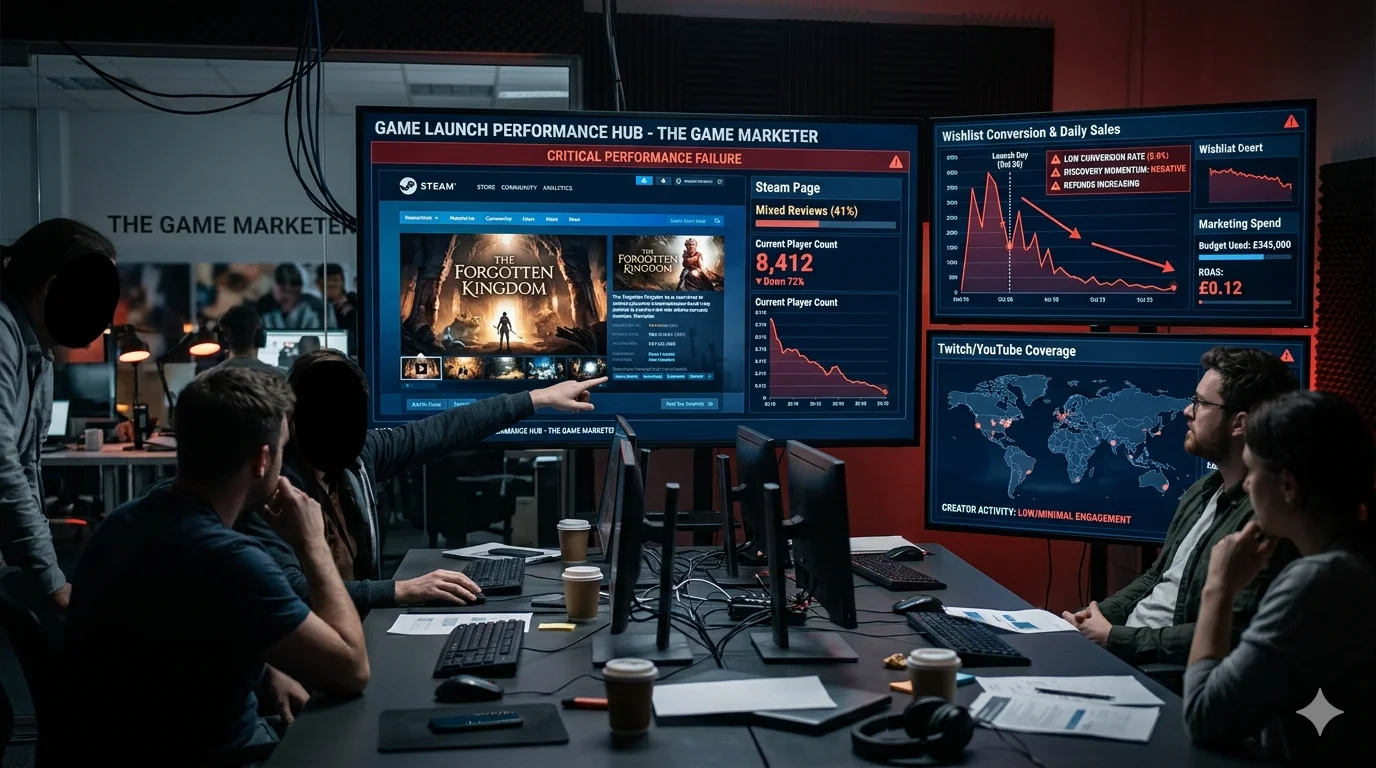
The majority of failed Steam launches follow the same pattern: good game, weak signal generation.
Four main reasons most launches fail:
1. Low Wishlist Momentum
Developers often focus on total wishlists instead of how they are built.
Steam prioritises momentum, not just volume. A sudden increase in wishlists close to launch signals rising demand, which increases visibility.
Without that momentum:
- Your game misses “Popular Upcoming”
- You receive less homepage exposure
- Discovery becomes limited
If you want to understand how to build that momentum curve properly, this guide on: How to build hype for a game launch before release explains how structured pre-launch activity directly impacts visibility.
2. Weak Conversion at Launch
Wishlists only matter if they convert. If players do not purchase within the first 24 to 48 hours, you will experience:
- Sales velocity drops
- Algorithmic exposure slows down
- Long-term growth becomes harder
Common causes:
- Unclear positioning
- Weak store page
- Misaligned audience
3. Launch Activation is weak or worse, not coordinated
Many developers treat launch day passively. They release the game and hope for traction. Experienced teams coordinate:
- Creator uploads
- Community engagement
- Review generation
All within the same window. This creates a spike in activity, which Steam interprets as demand.
4. No Pre-Launch Feedback Loop
Launching without testing is one of the biggest risks.
Without:
- Demo validation
- Store page testing
- Player feedback
You are relying on assumptions. That usually results in poor conversion and missed expectations.
Set Launch Goals Around Wishlist Velocity, Conversion, and Sales Acceleration
For PC/Steam launches, installs are far less important than wishlists, conversion, and sales momentum. Intent is everything.
Your game marketing KPIs should be structured around how players move from interest to purchase.
Pre-Launch (Demand Signals)
- Weekly wishlist growth rate
- Traffic sources driving wishlists
- Demo-to-wishlist conversion
Launch Window (Conversion Signals)
- Wishlist-to-purchase conversion rate
- Revenue per store visitor
- Sales velocity in first 48 hours
Post-Launch (Sustainability Signals)
- Review score and sentiment
- Community activity
- Ongoing sales trends
Most developers track totals. Steam reacts to rates and momentum.
Build a Steam-Focused Narrative and Store Identity
Your Steam page is your most important marketing asset. Players decide within seconds whether your game is worth their attention.
The First Impression Layer
When someone lands on your page, they scan:
- Capsule art
- First screenshot
- Trailer preview
If your value is not clear immediately, they leave.
Narrative Positioning That Converts
Instead of describing features, define your game using:
Genre + Unique Twist + Player Outcome
Example: A strategy game becomes “A survival strategy game where every decision permanently reshapes your world”
This works because it:
- Anchors familiarity
- Adds differentiation
- Creates emotional curiosity
If you want to refine this approach, this analysis on the power of storytelling in game marketing campaigns explains how narrative positioning improves conversion.
Store Page Elements That Actually Matter
Screenshots
- Show gameplay progression
- Lead with core loop clarity
- Avoid purely cinematic visuals
Trailer
- Show gameplay within first 3 seconds
- Avoid slow intros
- Focus on player interaction
Description
- First two lines must hook attention
- Focus on outcomes, not features
Strong storytelling in game marketing increases both wishlist rate and purchase intent.
Audience Segmentation and Early Community Seeding
PC game marketing is driven by niche audiences, not broad reach.
Why Broad Targeting Fails
Targeting “RPG players” is too general.
A better segment: Players who enjoy branching narratives with meaningful consequences. The more specific your audience, the stronger your conversion.
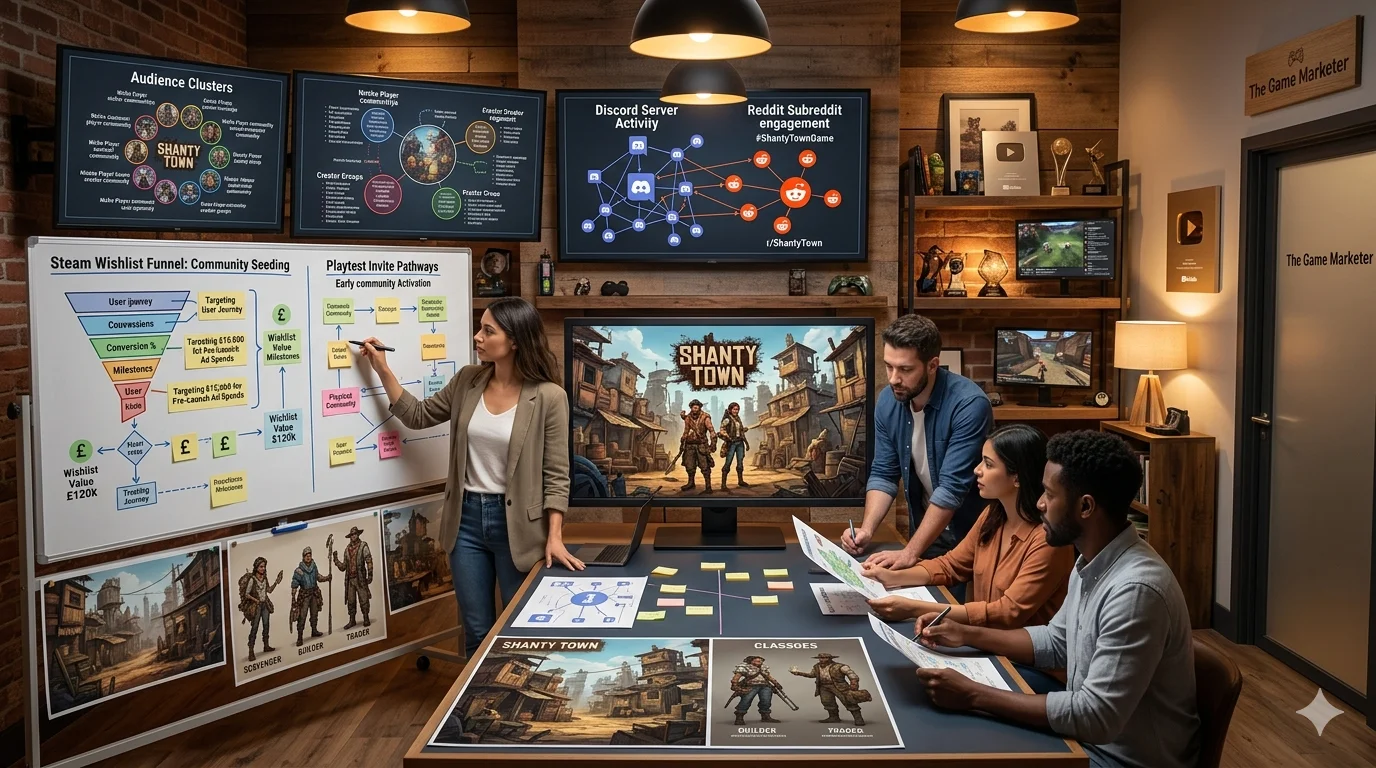
Community Seeding Strategy
Step 1: Identify Existing Player Clusters
- Reddit communities
- Discord groups
- Creator audiences
Step 2: Participate Before Promoting
- Share development updates
- Ask for feedback
- Build familiarity
Step 3: Convert to Owned Channels
- Discord server
- Email list
- Playtest groups
To understand how different platforms contribute to growth, this guide on social media strategies for gaming brands that drive real engagement highlights where to focus. Now, for long-term engagement, this breakdown on how to build a strong gaming community on social media from day one explains how to convert attention into active player communities.
Your goal is not traffic. Your goal is to activate players before launch who are ready to convert immediately.
Pre-Launch Campaigns: Wishlist Growth and Demo Validation
Steam success is heavily influenced by what happens before launch.
Demo Strategy
A demo is not just exposure. It is validation.
Track:
- How many players wishlist after playing
- How long they stay engaged
- Where they drop off
If players enjoy the demo but do not wishlist, your positioning is unclear.
Steam Events and Festivals
Events like Steam Next Fest can significantly boost visibility.
To maximise impact:
- Prepare your demo in advance
- Optimise your store page before the event
- Align creator coverage with the event window
Creator Activation
Creators are one of the biggest drivers of discovery on PC.
Best approach:
- Provide early access
- Build relationships before launch
- Encourage organic coverage
For scaling reach effectively, this article on game marketing partnerships that drive mutual growth and visibility explains how collaboration amplifies exposure.
Honestly, we made this Steam Launch Checklist because we got tired of seeing studios miss things at the last minute, so here is a free interactive checklist you can go through yourself and make sure nothing gets left behind. The Game Marketer Steam Launch Checklist
Optimise Your Steam Page for Discoverability
Steam’s algorithm responds to behaviour, not keywords.
Signals That Influence Visibility
- Click-through rate from impressions
- Wishlist conversion rate
- Early sales velocity
- Review volume and quality
Advanced Optimisation Tactics
- Test capsule art during traffic spikes
- Adjust tags based on player behaviour
- Encourage early reviews from engaged players
To strengthen your optimisation approach, this guide on app store optimisation tips for increasing game discoverability outlines principles that also apply to improving conversion and visibility on Steam.
Launch Momentum: Engineering the First 48 Hours
Your first 48 hours define your trajectory.
What Steam Evaluates Immediately
- How quickly players purchase
- How actively they engage
- How many reviews are generated
Launch Execution System
- Coordinate creator content within the same window
- Activate your community before launch
- Respond to feedback immediately
- Encourage reviews naturally
Strong early performance increases your exposure across discovery systems. Weak performance limits your reach.
Post-Launch Strategy: Building a Second Growth Phase
The biggest mistake is slowing down after launch.
What High-Performing Games Do
- Release updates quickly
- Re-engage creators
- Introduce new content
- Run promotional events
Data-Driven Iteration
Track:
- Conversion rates
- Player feedback
- Review sentiment
Use this data to refine your next push.
Key Insight
Your second growth wave is often stronger because it is based on real player behaviour, not assumptions.
A successful Steam launch is not about exposure. It is about creating the conditions that make visibility inevitable.
This Game Launch Marketing Checklist for PC/Steam is built around how the platform actually works:
- Build demand before launch
- Convert interest into sales quickly
- Sustain engagement after release
Games that succeed do not rely on a single moment. They build momentum, validate decisions, and continue growing long after launch.
Frequently Asked Questions
1. What is a Game Launch Marketing Checklist for PC/Steam?
It is a launch framework focused on wishlists, demo validation, creator activation, store conversion, and early sales momentum.
2. How many wishlists are needed before launching on Steam?
There is no fixed number, but many successful games aim for several thousand targeted wishlists before release. Quality and conversion matter more than raw volume.
3. When should marketing start for a PC game?
Ideally, Steam marketing should begin 6 to 12 months before launch so you can build wishlists, test positioning, and grow a community.
4. Are demos important for Steam launches?
Yes. Demos help validate gameplay, improve wishlist conversion, and generate stronger launch signals.
Launching on Steam is not about doing more marketing. It is about executing the right system at the right time. At The Game Marketer, we help studios build PC/Steam-focused launch strategies designed around real platform behaviour, not assumptions.
From wishlist growth systems and creator activation to store optimisation and launch execution, every stage is built to maximise visibility, conversion, and long-term success.
If you are preparing your launch and want a strategy tailored to your game and audience, you can connect with us.
Turn your launch into a growth system, not a one-time event.